Statistical Trends Guiding the Assembly of Multi-Event Forecasts in Popular Athletic Activities

Statistical trends shape how analysts assemble forecasts for sequences of athletic events across football, tennis, basketball and other popular sports. Data from major competitions reveals patterns in scoring rates, player performance metrics and cross-event correlations that inform combined predictions without relying on isolated match outcomes. Observers note that multi-event models often incorporate variables such as home advantage percentages, surface-specific win rates in tennis and fatigue indicators from back-to-back fixtures.
Core Data Sources and Collection Methods
Organizations compile extensive datasets from league records, player tracking systems and historical tournament results. In June 2026 analysts examined aggregated figures from European football leagues alongside North American basketball schedules to identify recurring sequences where high possession teams maintained elevated scoring probabilities across consecutive matches. Researchers discovered that event clustering, where multiple high-stakes games occur within short windows, produces measurable shifts in variance for outcome distributions.
Performance metrics undergo normalization to account for schedule strength and venue effects before integration into forecasting frameworks. Studies from institutions in Australia and Canada demonstrate how longitudinal tracking of athlete workloads correlates with subsequent event results in multi-sport calendars. These datasets feed regression models that estimate joint probabilities rather than treating each contest as independent.
Key Statistical Techniques Applied to Combined Forecasts
Multivariate Poisson distributions frequently model goal or point totals across linked events while copula functions capture dependencies between separate matches. Analysts apply time-series adjustments to handle momentum effects observed in tennis sets or football halves where early performance influences later stages. Machine learning ensembles trained on five years of match data improve calibration for accumulator-style forecasts by weighting recent form against longer-term averages.
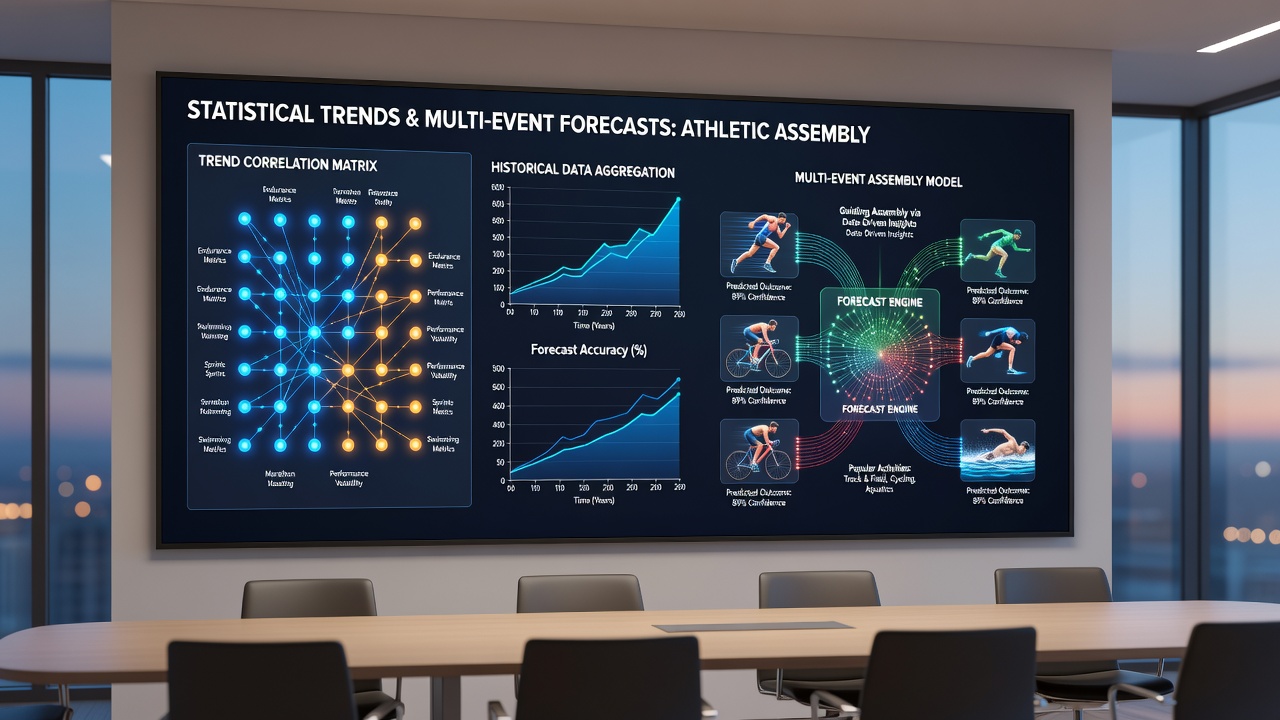
What's notable is the emergence of network analysis methods that map interactions between player statistics across different athletic disciplines. For instance, endurance markers from cycling stages have shown limited but detectable carryover influence when athletes compete in subsequent tennis events during combined training programs. Such cross-sport linkages remain secondary to within-discipline trends yet receive increasing attention in comprehensive models.
Observed Patterns in June 2026 Competitions
During June 2026 tournaments data indicated elevated draw frequencies in football fixtures following congested midweek schedules while tennis tiebreak outcomes aligned more closely with serve percentage differentials accumulated over prior rounds. Basketball playoff series revealed consistent home-court advantages that compounded across games when travel distances exceeded typical thresholds. These trends prompted adjustments in weighting schemes for models forecasting extended event sequences.
Correlation matrices derived from that period highlighted stronger positive associations between low-scoring football matches and subsequent defensive performances in linked competitions. Analysts at research centers in the European Union documented how such patterns held across multiple leagues when controlling for team rankings and injury reports. External validation from sources like the Australian Bureau of Statistics sports participation reports provided comparative benchmarks for seasonal variations.
Validation Approaches and Model Refinement
Backtesting procedures evaluate forecast accuracy using rolling windows of historical data to simulate real-time assembly of multi-event predictions. Calibration plots assess whether predicted joint probabilities match observed frequencies across bins of varying event counts. Cross-validation techniques prevent overfitting by partitioning datasets according to geographic regions and competition types.
Updates in June 2026 incorporated new tracking data from wearable sensors which refined fatigue estimates used in sequence modeling. Industry reports from groups such as the Canadian Sports Analytics Association supplied regional benchmarks that complemented global league statistics. Refinement cycles continue as fresh event outcomes feed iterative improvements to the underlying algorithms.
Conclusion
Statistical trends continue to guide the construction of multi-event forecasts through systematic integration of performance metrics, dependency modeling and ongoing validation against observed results. Data from 2026 competitions reinforced established patterns while introducing refinements tied to schedule density and athlete monitoring. Continued collection from diverse athletic activities supports progressive enhancement of these analytical frameworks across global competitions.